Skip to content

Access

Access to the LifeWatch Romania infrastructure

IC LifeWatch is the University of Bucharest's collocated LifeWatch, eLTER and ICOS research infrastructure. Its laboratories, equipment, data centre and data are open for research and training to academic institutions, public bodies and private entities. This page explains who is responsible for the infrastructure and how to request access.

In brief

  1. First talk to the laboratory manager.
  2. Send the request to the IC LifeWatch director at least 14 days ahead.
  3. After approval the costs are set and, where needed, a contract or collaboration agreement is signed.
  4. Work takes place in the presence of designated staff.
Access request

Responsibility

Who is responsible for the infrastructure

IC LifeWatch was established in 2019, with the LifeWatch Romania project, as a research infrastructure of the University of Bucharest without separate legal personality. It is coordinated by the infrastructure director together with the research station coordinators, and the Brăila and Sinaia stations are coordinated by RCSES.

Owner

University of Bucharest

Provides the resources for day-to-day operation, covering upkeep, administrative and technical staff, repairs, maintenance and equipment upgrades. Access contracts and agreements are signed with the university.

unibuc.ro

Coordination

The IC LifeWatch director and RCSES

The infrastructure director receives and approves access requests together with the station coordinators. The Research Centre in Systems Ecology and Sustainability (RCSES) coordinates the Brăila and Sinaia stations and ensures the university's participation in LifeWatch ERIC, eLTER and ICOS.

rcses.unibuc.ro

Operation

The laboratories and their staff

Each laboratory has a designated manager and at least one technician. Equipment is used only according to the laboratory's procedures and only by designated staff, and the station coordinators schedule user access.

The laboratories →
StationCoordinating research centreIC LifeWatch laboratoriesLink
BrăilaRCSES, Faculty of BiologyEcological analyses for floodplain wetlands, genetics for wetlandsUB page Mihai Adamescumihaicristian.adamescu@g.unibuc.rostatiunea.braila@gmail.com
SinaiaRCSES, Faculty of BiologySampling and preconditioning for mountain areas, the data centre with virtual laboratoriesUB page Mihai Adamescumihaicristian.adamescu@g.unibuc.ro
OrșovaThe research centres of the faculties of Geography, Chemistry, Biology and Geology, including the Centre for Land Degradation and Geomorphological Dynamics and the Centre for Risk Studies, Spatial Modelling and Terrestrial and Coastal System DynamicsSamples and geomatic data for river ecosystems, sampling and preconditioning for river watersUB page Mihai Adamescumihaicristian.adamescu@g.unibuc.ro
Sfântu GheorgheFaculty of Geography, with the Coastal Research Centre for Environmental Protection and the Research Centre for Environmental Geology and GeophysicsMonitoring of coastal and deltaic ecosystems, sampling and preconditioning for coastal and deltaic areasUB page Mihai Adamescumihaicristian.adamescu@g.unibuc.ro
DistributedRCSESThe mobile social research laboratory, the flux stations, the 20 climate stationsStation list →

Principles

How we manage access

The regulation aims for requests to be handled transparently, fairly and efficiently, following three principles.

Open access

Broad and fair access to the infrastructure, while keeping it operationally sustainable.

Fair use

Resources are used responsibly, avoiding overuse, which would block other researchers, and underuse, which would endanger the infrastructure's upkeep.

Shared and transparent data

Data generated in the infrastructure are made openly accessible whenever possible, to encourage collaboration and scientific progress.

Users

Who can use the infrastructure

Unrestricted access

Staff of the stations and of their coordinating centres

Researchers associated with these centres have unrestricted access to the laboratories, under the supervision of each laboratory's designated staff.

On request

Other University of Bucharest researchers

Teaching staff, researchers, doctoral and master's students with the necessary skills. Requests use the Annex 1 template of the regulation.

Contract or agreement

Researchers from Romania and abroad

Under contracts, research, development and innovation projects or collaboration agreements, with the request on the Annex 2 template. Partners in university projects work under the project agreements.

Priority goes to experiments and analyses in ongoing projects of the centres that coordinate the stations. The infrastructure is used only for research, innovation, technological development and scientific events.

Procedure

How to obtain access

1 · Preliminary discussion

Talk to the laboratory manager about the experiment, analyses, number of samples and period. The request must confirm that this discussion took place.

2 · The request

The request goes to the IC LifeWatch director at least 14 days before the requested period, using Annex 1 for UB researchers or Annex 2 for those from outside the university. State the equipment, laboratory, analyses, period and funding source.

3 · Competences

State whether you have the skills the experiment requires. If not, infrastructure researchers can run the analyses under a collaboration agreement (Annex 3).

4 · Approval and costs

The director approves the request together with the laboratory manager. After approval, usage and consumable costs are set, and users from outside the university sign a contract or place a firm order.

5 · Work in the laboratory

Access takes place only in the presence of the laboratory manager, a qualified technician or an infrastructure researcher. Equipment is operated by designated staff.

Equipment taken out of the laboratory. Laboratory equipment is used outside the laboratory only exceptionally, with a justification note endorsed by the laboratory manager and the IC LifeWatch director and a handover record signed with the station's asset manager. Field equipment is not subject to this restriction.

Costs

Who pays

UserWhat they coverHow
UB researchers, in projectsConsumables and utilities for the experimentFrom the project budget
UB researchers, core activityConsumables and utilities for the experimentFrom the faculty, department or doctoral grant budget
Users from outside UBAll usage costs, including equipment depreciation and operating expensesContract or firm order, with fees set by user type and equipment complexity
Partners in UB projectsConditions set for the duration of the projectSpecific agreements or protocols that set out the benefits for the university

Income from partnerships and access fees is reinvested in maintaining and developing the infrastructure.

Access to equipment

The infrastructure's 11 laboratories

Each laboratory has a designated manager. In your request, use the equipment name as it appears on lifewatch.ro.

LaboratoryLocationExample equipment
Monitoring and analysis of coastal and deltaic ecosystemsSfântu GheorgheMobile module and sample analysis module
Sampling, preconditioning and sample isolation for coastal and deltaic areasSfântu GheorgheSampling and sample preservation equipment
Complex ecological analyses for floodplain wetlandsBrăilaMobile telemetry and remote sensing, ecological experiments, terrestrial ecosystem and biodiversity monitoring
Genetics for ecosystem studies in wetlandsBrăilaIllumina MiniSeq sequencer, Bruker Biotyper MALDI-TOF, fluorescence microscopy
Monitoring, sampling and analysis of samples and geomatic data for river ecosystemsOrșovaDrones, bathymetry, XRF geochemical scanning, mobile laboratory
Sampling, preconditioning and sample isolation for river aquatic areasOrșovaSampling and sample preservation equipment
Sampling, preconditioning and sample isolation for mountain areasSinaiaSampling and sample preservation equipment
Data centre, LifeWatch interface module (virtual laboratories)SinaiaHCI private cloud, NVIDIA Tesla T4 cards, NVMe and scale-out storage
Mobile social research laboratoryDistributedRapid collection of social data in the field
Complex stations for in situ ecological flux monitoringDistributedFive eddy-covariance towers, cosmic-ray neutron probes
Distributed stations for climate research and climate change adaptationDistributed20 climate stations, UV and RaZON+ radiometers, the buoy
Detaliile laboratoarelor →

Virtual access

Access to the computing infrastructure

The data centre at the Sinaia Zoological Station is one of the infrastructure's 11 laboratories, serving as the LifeWatch interface module with virtual laboratories. Its resources are requested like any other laboratory, through a request to the IC LifeWatch director after a discussion with the data centre manager.

What you can obtain

  • virtual machines in the university's private cloud, with Intel Xeon processors and, where needed, NVIDIA Tesla T4 cards
  • storage space for data and results
  • access to the virtual laboratories connected to LifeWatch ERIC
  • publishing results through the platform's OGC, COG and STAC services

What to state in your request

  • the purpose and duration of the work, the project and the funding source
  • the approximate number of cores, memory, GPU needs and data volume
  • the people who will use the resources and the software needed
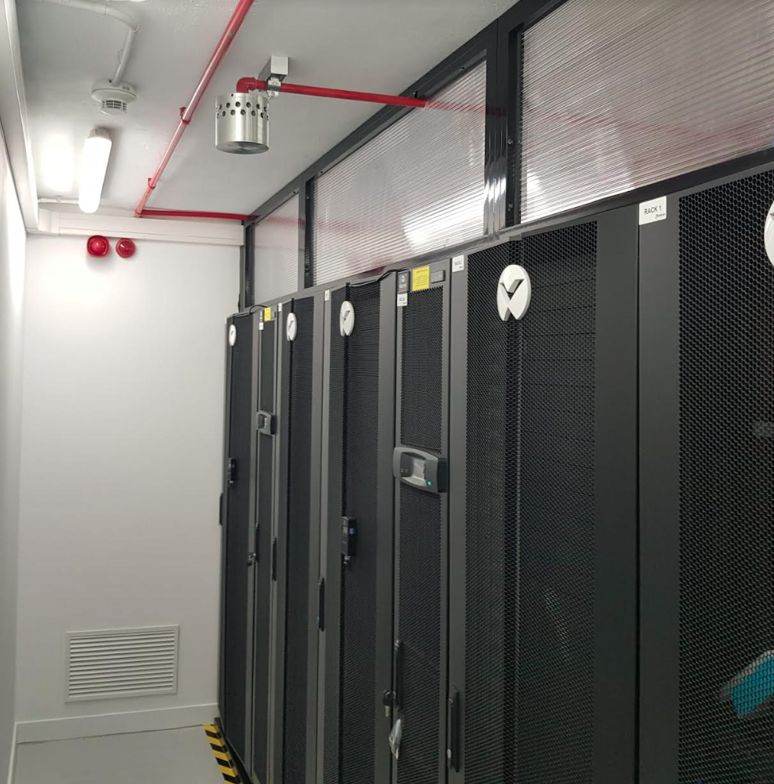
Server racks of the Sinaia data centre
The LifeWatch Romania data centre in Sinaia.

Obligations

What users commit to

  • complying with the regulation, the laboratory procedures and the law
  • covering usage and consumable costs, where applicable
  • prompt repair of any equipment damaged through improper use
  • including as co-authors the infrastructure members who actually took part in the analyses or experiments
  • acknowledging the infrastructure in any result obtained with its equipment

At the end, the laboratory manager and the applicant record in the collaboration agreement the work done, the state of the equipment and how the results will be used.

Acknowledgement text

Experiments in this paper were carried out in the collocated LifeWatch, eLTER, ICOS Research Infrastructure, Laboratory …, University of Bucharest.

Add the name of the laboratory used.

Request

Access request

This form prepares your request to the IC LifeWatch director. Send it at least 14 days before the period you need, after talking to the laboratory manager.

The official request is signed on the regulation's template, Annex 1 for UB researchers or Annex 2 for those from outside the university, and the details in this form are used to complete it.

The University of Bucharest uses the data in this form only to assess your request.

The official request forms (Annexes 1–3) are in Romanian.

LifeWatch Romania is the University of Bucharest's collocated LifeWatch, eLTER and ICOS research infrastructure. The Brăila and Sinaia stations are coordinated by the Research Centre in Systems Ecology and Sustainability (RCSES) at the Faculty of Biology.

University of BucharestRCSES, Research Centre for Systems Ecology and Sustainability